CHEQUE BOUNCE CASES LAWYER
Are you looking for Cheque Bounce Lawyer?
A cheque is a trusted financial instrument, and when it get dishonoured, it not only causes financial loss but also affects credibility and business relations. Cheque bounce cases are criminal offence and are governed by Section 138 of the Negotiable Instruments Act, 1881.
If your cheque has been dishonoured or you have received a legal notice for cheque bounce, timely legal action is important. Our firm provides end-to-end legal assistance in cheque bounce matters, from issuing statutory notices to representing clients in the law of Court.
What Is a Cheque Bounce?
A cheque is said to be dishonoured when a bank return it unpaid upon presentation. While a cheque bounce may appear to be a simple banking issue, in Indian law it carries serious criminal consequences, provided the cheque was issued towards a legally enforceable debt or liability.
Common reasons for cheque dishonour include:
- Insufficient balance;
- Account closed or dormant;
- Payment stopped by drawer;
- Signature mismatch;
- Exceeds arrangement with the bank;
- Cheque presented beyond validity period.
Once cheque dishonoured for the above reasons, it attracts criminal liability under Section 138 of the Negotiable Instruments Act 1881, subject to fulfilment of statutory conditions.
Legal Framework Applicable to Cheque Dishonour Proceedings
Cheque bounce cases are governed by the Negotiable Instruments Act, 1881, which lay down the offence, procedure, presumption in favour of the holder, vicarious liability of companies and directors, and compounding of offences. For a successful prosecution under Section 138, the following essential ingredients must be fulfilled:
- The cheque must have been issued in discharge of a legally enforceable debt or liability;
- The cheque must be presented within its period of validity i.e. 3 months;
- The cheque must be returned unpaid by the bank with a return memo;
- A written legal demand notice must be issued within 30 days from receipt return memo;
- The drawer must fail to make payment within 15 days of receipt of the legal notice
Only if the drawer fails to make payment within the statutory notice period then a valid cause of action arise for instituting a criminal complaint under the Negotiable Instruments Act.
Punishment and Consequences of Cheque Bounce
Upon conviction under Section 138 NI Act, the accused may be punished with:
- Imprisonment up to two years, or
- Fine up to twice the cheque amount, or
- Both imprisonment and fine
In addition, courts may award compensation, interest, and impose costs. In many cases, cheque bounce proceedings also adversely affect the accused’s business reputation, creditworthiness, and professional standing.
Step-by-Step Procedure in a Cheque Bounce Case
- Dishonour of Cheque: A cheque is returned unpaid by the bank along with a return memo specifying the reason for dishonour.
- Issuance of Legal Notice: A statutory legal notice demanding payment of the cheque amount must be sent to the drawer within 30 days of return memo. This notice forms the foundation of the entire case and must be drafted with meticulousness.
- Filing of Criminal Complaint: If payment is not made within 15 days of receipt of legal notice, a criminal complaint under Section 138 NI Act is filed before the Judicial Magistrate.
- Summoning and Trial: The Magistrate examines the complaint and evidence, issues summons to the accused, and conducts a summary trial as per law.
- Judgment: Upon conviction, the court passes sentencing orders and directs payment of compensation.
Our Comprehensive Cheque Bounce Legal Services
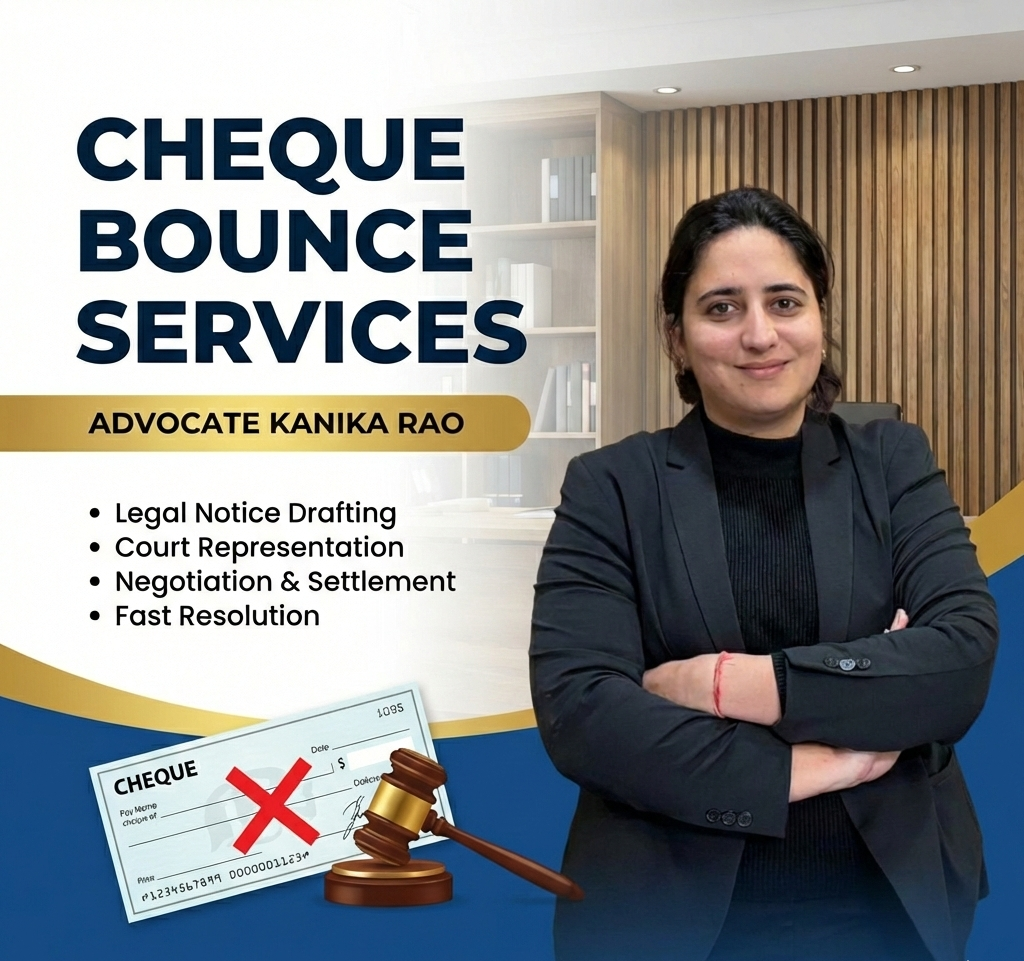
We provide end-to-end assistance in cheque bounce matters, including:
- Drafting and issuing legal notices;
- Vetting and replying to legal demand notices;
- Filing complaints under Section 138 NI Act;
- Representation before Judicial Magistrate Courts;
- Defence for accused persons in cheque bounce cases;
- Compounding and settlement negotiations;
- Recovery-focused litigation strategies;
- Appeals, revisions, and quashing petitions;
- Advisory for businesses on cheque risk management
Each case is handled with a strategic approach aimed at speedy recovery, legal compliance, and effective resolution.
Why Choose our services?
Our firm offers a focused, strategic, and result-driven approach to cheque bounce litigation, backed by thorough knowledge of the Negotiable Instruments Act and extensive courtroom experience. We place strong emphasis on carefull drafting, strict adherence to statutory timelines, and procedural compliance to ensure that cases are not defeated on technical grounds. Whether representing the complainant or the accused, we adopt a practical strategy aimed at swift resolution through effective prosecution, robust defence, or negotiated settlement where appropriate. Clients benefit from clear legal advice, regular case updates, and personalised attention at each stage of the proceedings. Our objective is not merely to litigate, but to secure timely recovery, protect reputational interests, and achieve legally sustainable outcomes.
Frequently Asked Questions (FAQs)
Still have more questions?
Connect with Adv Kanika Rao over the call or drop a email.
Call now