
Arbitration Lawyer in Gurgaon for Commercial, Construction & MSME Disputes
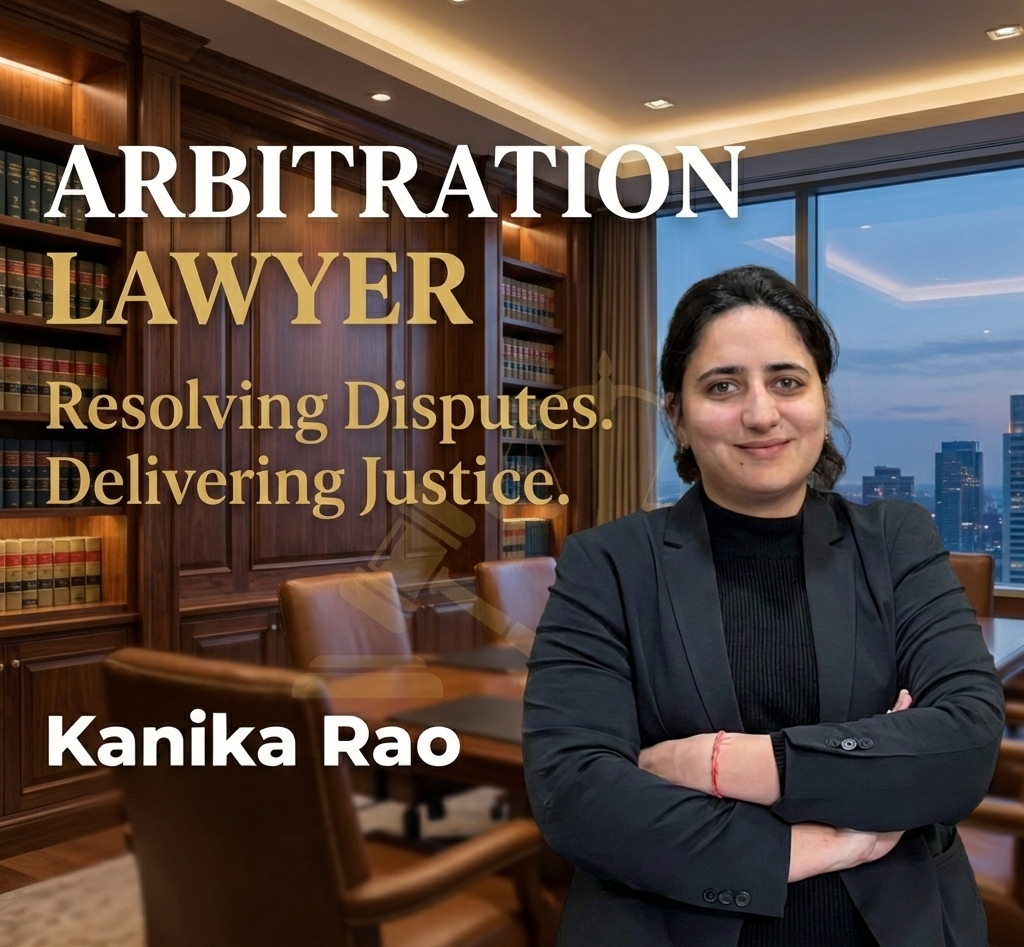
Arbitration can resolve a business dispute privately and with an award that is enforceable like a decree, but only if each stage is handled correctly. Advocate Kanika Rao advises and represents businesses, MSMEs and individuals in arbitration under the Arbitration and Conciliation Act, 1996, in MSME Facilitation Council claims, and in related proceedings before the courts at Gurugram and the Punjab & Haryana High Court.
Arbitration and Dispute Resolution Services in Gurugram
Arbitration rewards early preparation. The notice, the choice of arbitrator and the first interim application often shape the result more than the final hearing.
Notice invoking arbitration
A notice under Section 21 that sets out the dispute and proposes the arbitrator, which also fixes the date from which limitation is counted.
Appointment of the arbitrator
Petitions under Section 11 before the High Court when the other side does not cooperate, and challenges to biased or ineligible appointments.
Interim protection
Applications under Section 9 to the court and Section 17 to the tribunal to protect money, goods, property or evidence.
Conduct of the arbitration
Statement of claim or defence, counterclaims, documents, witness evidence, cross-examination and final arguments.
Challenge to an award
Petitions under Section 34 to set aside an award, and replies where the other side challenges an award in your favour.
Enforcement of awards
Execution of domestic awards as decrees, and enforcement of foreign awards under the New York Convention.
MSME Facilitation Council claims
Claims for delayed payment and compound interest under the MSMED Act, 2006, and defence of such claims for buyers.
Construction and real estate
Contractor claims, termination disputes, escalation and delay claims, and builder-buyer arbitrations.
Shareholder and partnership disputes
Disputes under shareholders’ agreements, partnership deeds and joint venture contracts.
What Is Arbitration, and When Is It Right for You?
Arbitration is a private process in which the parties’ dispute is decided by one or more arbitrators instead of a court. It needs an arbitration agreement, usually a clause in the contract, made in writing (Section 7). If one party files a suit despite the clause, the court must refer the parties to arbitration on an application under Section 8, unless the agreement is not valid.
Advantages
- Confidential proceedings and a tribunal chosen for its expertise
- Statutory timelines for the award (Section 29A)
- Limited grounds for challenge, and an award enforceable like a decree
- Flexible procedure, including a fast-track option (Section 29B)
Limits
- Arbitrators’ fees and venue costs are borne by the parties
- Some disputes cannot be arbitrated, such as criminal, matrimonial and insolvency matters
- An arbitrator cannot bind people who are not parties to the agreement, except in limited cases
- Appeal on facts is not available, so mistakes are hard to correct
How an Arbitration Proceeds
- Review of the contract and claimWe read the arbitration clause, the seat, the governing rules, the limitation position and the evidence before anything is sent.
- Notice invoking arbitrationA notice under Section 21 is sent, proposing an arbitrator or asking the other side to agree on one.
- Constitution of the tribunalIf the parties do not agree, the High Court appoints the arbitrator under Section 11. Unilateral appointment by one party is not permitted, as the Supreme Court held in Perkins Eastman (2019) and the Constitution Bench in CORE v. ECI-SPIC-SMO-MCML (2024).
- PleadingsThe statement of claim and defence, with any counterclaim, are to be completed within six months of the arbitrator’s appointment (Section 23(4)).
- Evidence and hearingsDocuments are exchanged, witnesses give evidence by affidavit and are cross-examined, and the parties argue.
- AwardThe award must be made within 12 months of the completion of pleadings, extendable by six months by consent and further only by the court (Section 29A).
Role of the Courts in Arbitration
Interim measures (Section 9)
The court can grant interim protection before, during or after the arbitration. If the order is made before the arbitration starts, the arbitration must begin within 90 days.
Appointment (Section 11)
The High Court appoints the arbitrator when the agreed procedure fails, looking only at whether an arbitration agreement exists prima facie.
Setting aside and appeals (Sections 34 and 37)
The court hears challenges to awards, and appeals lie against certain orders, including orders setting aside or refusing to set aside an award.
The “seat” of arbitration decides which court supervises it, as explained by the Supreme Court in BGS SGS Soma (2019). We check the seat clause first, because filing in the wrong court wastes time.
Challenging and Enforcing an Arbitral Award
Challenge. A petition to set aside an award under Section 34 must be filed within three months of receiving it, extendable by only 30 days for sufficient cause. The grounds are narrow: incapacity of a party, an invalid agreement, lack of proper notice, an award beyond the scope of the reference, improper composition of the tribunal, a non-arbitrable dispute, conflict with the public policy of India and, for domestic awards, patent illegality on the face of the award. The court does not re-examine the merits.
Enforcement. Once the time for challenge has passed, or a challenge fails, the award is enforced as a decree (Section 36). Filing a challenge does not automatically stay the award; the court may grant a stay on conditions such as depositing the amount. Foreign awards from New York Convention countries are enforced under Part II of the Act.
MSME Delayed Payment Claims under the MSMED Act, 2006
A micro or small enterprise registered on the Udyam portal that supplies goods or services must be paid within the agreed period, which cannot exceed 45 days (Section 15). If payment is late, the buyer owes compound interest with monthly rests at three times the bank rate notified by the Reserve Bank (Section 16).
The supplier can refer the dispute to the Micro and Small Enterprises Facilitation Council, online through the MSME Samadhaan portal. The Council first tries conciliation and, if that fails, arbitrates or refers the dispute to arbitration (Section 18). The Supreme Court held in Gujarat State Civil Supplies Corporation v. Mahakali Foods (2022) that this procedure applies even if the contract has its own arbitration clause. A buyer who wants to challenge the resulting award must first deposit 75% of the amount awarded (Section 19).
Drafting an Arbitration Clause That Works
Many disputes about arbitration are really disputes about a badly drafted clause. A good clause names the seat, the number of arbitrators and how they are appointed, the governing rules (ad hoc or an institution), the language and the law of the contract, and sets out any steps such as negotiation or mediation before arbitration. We draft and review clauses as part of our contract drafting and vetting services and our corporate advisory work.
Mediation, Conciliation and Pre-Institution Mediation
Not every dispute needs an arbitration. The Mediation Act, 2023 provides a framework for mediated settlements, and commercial suits that do not seek urgent interim relief must first go through pre-institution mediation under Section 12A of the Commercial Courts Act, 2015. Conciliation under Part III of the Arbitration Act is another option. We recommend the route that fits the amount at stake, the relationship between the parties and how quickly you need a result.
Other Business Law Services
Frequently Asked Questions about Arbitration in Gurgaon
When can a dispute be referred to arbitration?
When the parties have a written arbitration agreement, either a clause in the contract or a separate agreement made before or after the dispute arose, and the dispute is of a kind that can be arbitrated.
Is an arbitral award binding?
Yes. An award is final and binding on the parties and is enforced like a court decree, subject only to a challenge on the limited grounds in Section 34.
How long does arbitration take?
The Act requires the award within 12 months of the completion of pleadings, which themselves should be completed within six months of the appointment. Extensions are possible, but the time limits keep most arbitrations faster than civil suits.
What if the other party refuses to appoint an arbitrator?
You can apply to the High Court under Section 11 for appointment, usually after the period given in your notice expires.
Can the other side appoint the arbitrator alone?
Clauses allowing one party to appoint a sole arbitrator unilaterally are not valid, following Perkins Eastman (2019) and the Constitution Bench decision in CORE (2024).
Can I get urgent relief before the arbitration starts?
Yes. The court can grant interim measures under Section 9, and the arbitration must then be started within 90 days of the order.
What is the time limit to challenge an award?
Three months from receiving the award, with a further 30 days only if sufficient cause is shown. After that, no challenge can be entertained.
Can an MSME claim interest for late payment?
Yes. A registered micro or small supplier can claim compound interest at three times the RBI bank rate for payments delayed beyond the agreed period, up to 45 days, through the MSME Facilitation Council.
What is your fee, and what does it cover?
Fees depend on the value of the claim, the forum and the stage. Contact us for a quotation, or write to adv.kanika.rao@gmail.com.
Talk to an Arbitration Lawyer in Gurgaon
Share the contract and a short note of the dispute. We will tell you whether arbitration, the MSME Council or another route best protects your claim.